

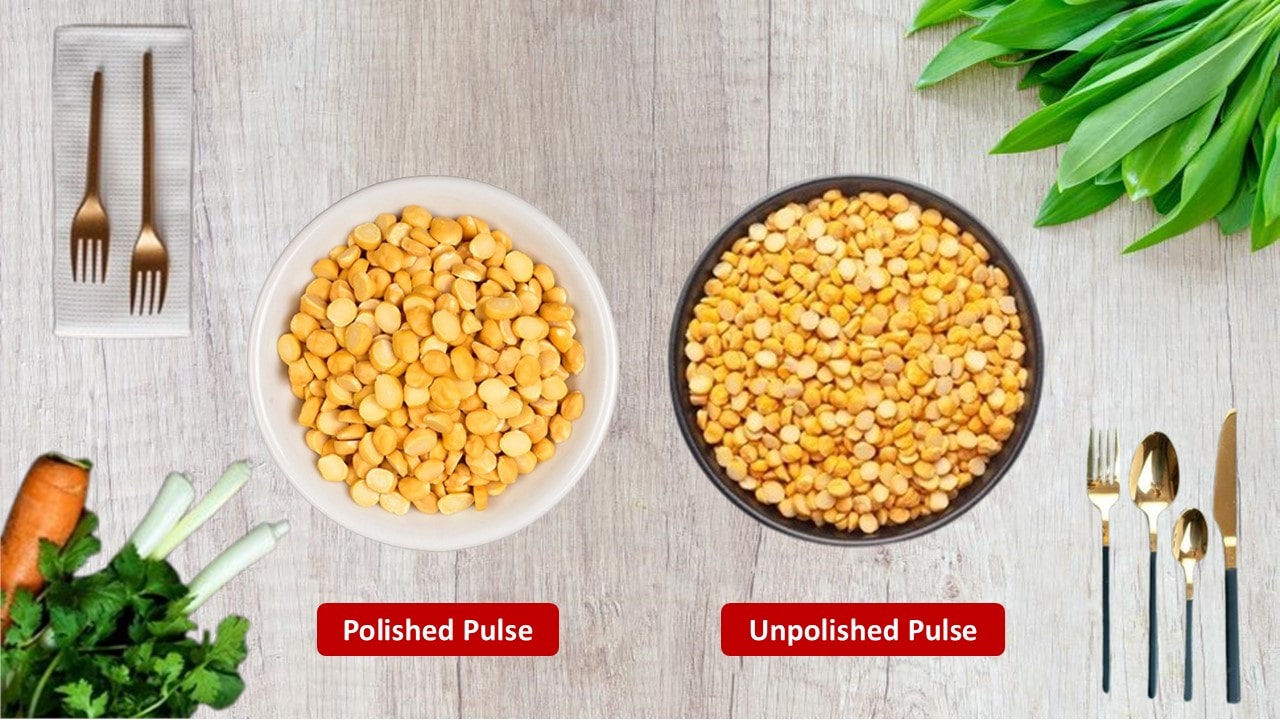
Unpolished Pulses v/s Polished Pulses - which one to choose and why?
हिंदी अनुवाद
दालें प्रोटीन, fiber और दूसरे आवश्यक पोषक तत्वों का एक rich source हैं और सभी भारतीय घरों में सभी दालें रोज खायी जाती हैं ताकि घर के सभी सदस्यों को जरूरी पोषण मिले और उनका स्वास्थ्य बेहतर बने। लेकिन समय के साथ दालें भी प्रदूषित हो गई हैं। आजकल polished दालें हर कहीं जगह बिक रही हैं और सस्ते होने के कारण हम सभी अक्सर इन्हें ही ख़रीद लेते हैं। लेकिन इनसे हमारे स्वास्थ्य पर होने वाले नुक्सानों के बारे में हम अंजान रहते हैं।
आइए आज हम समझते हैं कि इन 2 प्रकार की दालों और उनके स्वास्थ्य लाभों के बीच क्या क्या बुनियादी अंतर हैं।
Polished दालें क्या हैं और इनसे क्या कोई स्वास्थ्य जोखिम भी हो सकते हैं?
यह एक महत्त्वपूर्ण प्रश्न है और हमें इसको ध्यान से समझना चाहिए। दालों को अपनी दिखावट और रूप को बढ़ाने के लिए पॉलिश की जाती हैं, जिससे उन्हें एक चमकदार और चिकनी बनावट मिलती है। इस प्रक्रिया में दालों की ऊपरी सतह झड़ जाती है और उनके सभी पौष्टिक तत्व निकल जाते हैं। इसमें अक्सर artificial polishing agents उपयोग होते हैं, जैसे:
- Castor oil – यह एक वनस्पति तेल है जिसका उपयोग कंपनी विभिन्न कॉस्मेटिक और चिकित्सा उद्देश्यों के लिए करती हैं। इसका उपयोग मुँहासे को control करने, moisturise करने और swelling को कम करने में होता है। यह चेहरे और त्वचा के लिए तो स्वास्थ्य लाभ प्रदान कर सकता है, लेकिन इसमें higher fatty acids (C18 to C20) के triglycerides होते हैं। Doctors इन triglycerides को स्वास्थ्य के लिए बुरा मानते हैं, क्योंकि वे हृदय रोग, heart stroke और दूसरे health complications के खतरों को काफी बढ़ा सकते हैं।
- Talcum powder – इसमें Asbeestos होता है जो एक carcinogen है और नियमित रूप से खाने पर कैंसर का कारण बन सकता है।
- Artificial colors – यह petroleum based chemicals से बने होते हैं, इसलिए उनकी poisonous होने की संभावना काफ़ी ज़्यादा होती है। Research के अनुसार, artificial colors के consumption se कई बीमारियाँ बढ़ सकती हैं, विशेष रूप से ADHD यानी Attention-Deficit/Hyperactivity Disorder (ADHD)। यह एक neuro-developmental disorder है जो किसी व्यक्ति को ध्यान केंद्रित करने, impulse control करने और उनकी activity levels को बुरी तरह प्रभावित करता है।
- Synthetic Wax – Wax का प्रयोग मोमबत्ती, crayon, और food products की packaging बनाने में होता है। चाहे प्राकृतिक मोम हो या सिंथेटिक, निरंतर इसको खाने से आंतों की रुकावट (intestines blockage) हो सकती है
- Petroleum jelly – यह jelly त्वचा पर बाहरी उपयोग के लिए सुरक्षित हो सकती है, लेकिन अगर यह खाने में या साँस में चली जाये,तो त्वचा की जलन, आंख या नाक को परेशान कर सकती है।
Unpolished दालें क्या हैं और इनका चयन क्यों करना चाहिए?
वे दालें जिन्हें चमकदार बनाने के लिए पॉलिश नहीं की जाती और raw form में ही पैक किया जाता है, उनको unpolished pulse कहा जाता है। ये दालें अपने natural fiber, प्रोटीन और micronutrients, जैसे पोटेशियम, मैग्नीशियम, आयरन, जस्ता, थायमिन, को बनाए रखती हैं, जिससे वे एक स्वस्थ और सुरक्षित option होती हैं। इन दालों पर कोई artificial coating नहीं होती, इनके सभी पोषक तत्व सुरक्षित होते हैं और ये पाचन क्रिया को सुधारने में, bowel movement को regular बनाने में, blood sugar को control करने में और immunity को बढ़ाने में मदद करती हैं।
अगर आप अपने परिवारजनों के लिए unpolished daalon को चुनती हैं तो आप उनके लिए रासायन-मुक्त भोजन, बेहतर पोषण और स्वस्थ जीवन सुनिश्चित करती हैं, चाहे फिर देखने में ये दालें उतनी आकर्षक न लगें या polished pulses की तुलना में इनको पकाने में थोड़ा अधिक समय लगे।
लेकिन unpolished दालें महँगी होती हैं, उनका क्या?
बाजार में प्रति किलो रेट सुनकर हमें अक्सर लगता है कि unpolished दालें महंगी होती हैं… आइये एक छोटी सी calculation से समझते हैं कि कितनी महंगी होती हैं ये दालें !
अधिकतर चार सदस्यों वाले एक परिवार के लिए रोज के खाने में डेढ़ से दो कटोरी दाल ली जाती है, यानि कि रोज की दाल लगी: 150 gm (अगर आप मूंग या अरहर वगैरा लेते हैं) से 250 gm (अगर आप राजमा या काबुली चने वगैरा लेते हैं)… इसको 200 ग्राम प्रतिदिन का औसत ले लेते हैं।
अब क्योंकि खाना तो हम रोज खाते हैं और दिन में एक बार तो दाल बनायीं ही जाती है, तो इसका मतलब हुआ कि पूरे एक महीने में 30 दिन
दाल लगेगी, यानि 200 gm x 30 = 6 kg या 6 किलो प्रति माह।
दाल लगेगी, यानि 200 gm x 30 = 6 kg या 6 किलो प्रति माह।
आजकल polish वाली दाल का average market price है औसत रु. 139/किलो और unpolished दाल का आजकल बाजार भाव है औसत रु. 159/किलो (please refer exhibit for average prices)
यानि extra खर्चा हुआ: रु. 20/किलो
और 6 किलो दाल पर extra खर्चा हुआ: रु. 120
तो unpolished और शुद्ध दालो को खाने पर हमारा हर महीने का extra खर्चा हुआ: मात्र रु. 120
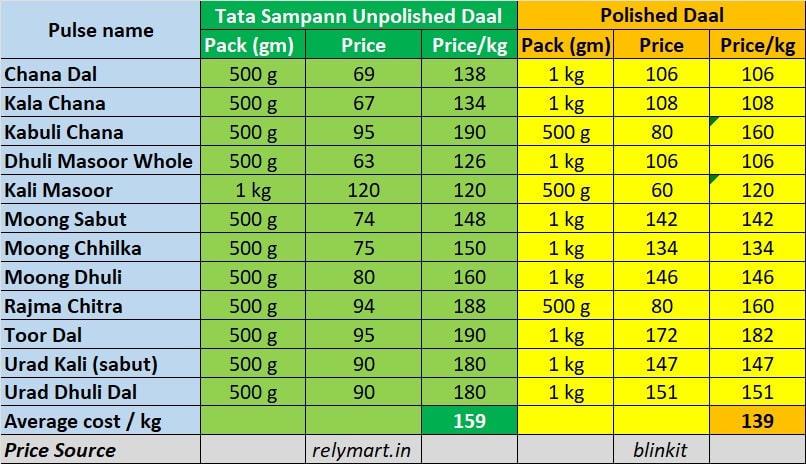
अब आप एक बार सोचिए कि अगर आप polished दाल खाते हैं तो आपके परिवार के चार सदस्यों को इससे होने वाली बीमारियों के इलाज पर खर्चा कितना आएगा ?
आजकल तो डॉक्टर के visit charge भी रु. 500/- से रु. 800/- होती है + दवाईयों का खर्चा । और अगर बीमार ठीक हो भी गई, तो chemicals से जो side effects होंगे, उनका क्या? परिवार के सभी सदस्यों की immunity तो एक जैसी नहीं होती ना!
तो अब आप ही बताइए कि कौन सी दाल का इस्तेमाल करना चाहेंगे ?… बड़े खर्चे वाली सस्ती polished दाल या बिना side effects वाली शुद्ध, लेकिन रु. 120/- प्रति माह महंगी unpolished दाल?
अच्छी quality की unpolished दालें कहां से मिल सकती हैं?
Tata Sampann, भारत की एक प्रतिष्ठित कंपनी Tata Consumer Products Limited का brand है जो ये high quality की दालें सीधे किसानों से arrange करती है और पूरे भारत में supply करती है। ये unpolished दालों की पूरी range लाती है।
वैसे तो Tata Sampann की सभी unpolished दालें आजकल सभी online platforms पर मिल जाती हैं लेकिन उन पर सही दाम की गारंटी नहीं होती। ख़ुशी की बात ये है कि अब फरीदाबाद में Tata Sampann की सभी unpolished दालें बहुत ही discounted rates पर उपलब्ध हैं और सबसे अच्छी बात यह है कि relymart.in पर सभी दालें सबसे कम कीमत पर उपलब्ध हैं जो किसी भी online retailer से कम है। इनमें से अधिकांश 500 ग्राम के पैक में हैं – आप इसे आज़मा सकते हैं और गुणवत्ता का आकलन स्वयं कर सकते हैं। आप इन दालों को Divine Foods, 495, सेक्टर 45, फरीदाबाद से ले सकते हैं या www.relymart.in से online order कर सकते हैं या 807-604-6661, 7000-13-83-43 पर कॉल / MSG कर के भी order कर सकते हैं । Home delivery भी reasonable extra charge पर उपलब्ध है।
लेखक: विवेक अग्रवाल
Info reference: Indian Institute of Pulses Research (IIPR) Reports & Health Journals
Disclaimer: ऊपर व्यक्त विचार मूलतः इस लेख के लेखक के हैं, उत्पाद निर्माता का इस से कोई वास्ता नहीं है।
Unpolished Pulses: A low cost option to ensure your family's health !!!
Pulses are a rich source of protein, fiber, and other essential nutrients, and pulses are eaten daily in all Indian households so that all the household members get the necessary nutrition and improve their health. But with time, the pulses have also become polluted. Nowadays, polished pulses are being sold everywhere, and because they are cheap, we often buy them. But we remain unaware of the harm they cause to our health.
Let us understand today the basic differences between these 2 types of pulses and their health benefits.
What are polished pulses and can they pose any health risks?
This is an important question, and we should understand it carefully. The pulses are polished to enhance their appearance, giving them a shiny and smooth texture. In this process, the upper surface of the pulses falls off, and all their nutritious elements are removed. It often uses artificial polishing agents, such as:
- Castor oil – It is a vegetable oil that companies use for various cosmetic and medical purposes. It is used to control acne, moisturize, and reduce swelling. It may provide health benefits for the face and skin, but it contains triglycerides of higher fatty acids (C18 to C20). Doctors consider these triglycerides bad for health because they can significantly increase the risk of heart disease, heart attack, and other health complications.
- Talcum powder – Contains Asbestos, which is a known carcinogen and can cause cancer if consumed regularly.
- Artificial colors – These are made from petroleum-based chemicals, which can make them more likely to be poisonous. According to research, consumption of artificial colors can increase many diseases, especially ADHD, i.e., Attention-Deficit/Hyperactivity Disorder (ADHD). It is a neuro-developmental disorder that severely affects a person’s ability to concentrate, control impulses, and regulate their activity levels.
- Synthetic Wax – Wax is used in making packaging of candles, crayons, and food products. Whether natural or synthetic, consuming it regularly can cause intestinal blockage.
- Petroleum jelly – This jelly may be safe for external use on the skin but can cause skin irritation and eye or nose irritation if ingested or inhaled.
What are unpolished pulses, and why should you choose them?
Those pulses that are not polished to make them shiny and are packed in raw form are called unpolished pulses. These pulses retain their natural fiber, protein, and micronutrients, such as potassium, magnesium, iron, zinc, and thiamine, making them a healthy and safe option. There is no artificial coating on these pulses; all their nutrients are safe, and they help in improving digestion, regularizing bowel movements, controlling blood sugar, and increasing immunity.
If you choose unpolished pulses for your family, you ensure chemical-free food, better nutrition, and a healthy life, even if the pulses may not look as attractive or take a little longer to cook than polished pulses.
But unpolished pulses are expensive, what about that?
Hearing the per kg rate in the market, we often think that unpolished pulses are expensive… Let us understand with a small calculation how expensive these pulses are!
Mostly for a family of four members, one and a half to two bowls of pulses are taken in the daily diet, hence, the daily pulses consumed are 150 gm (if you take Moong or Arhar, etc.) to 250 gm (if you take Rajma or Kabuli Chana, etc.)… Let’s take an average of 200 grams per day.
Now, since we eat food every day and pulses are prepared only once a day, it means that there are 30 days in a month.
Pulses will be required, i.e., 200 gm x 30 = 6 kg or 6 kg per month.
Nowadays, the average market price of polished pulses is Rs. 139/kg, and the average market price of unpolished pulses is Rs. 159/kg (please refer to the exhibit for average prices)
That means extra expense: Rs. 20/kg
And extra expenditure on 6 kg pulses: Rs. 120/month
So our monthly extra expenditure on eating unpolished and pure pulses is only Rs. 120.
Now, pause and think for a moment about how much it will cost to treat the diseases caused by eating polished pulses to four members of your family.
Nowadays, doctor’s visits cost Rs. 500/- to Rs. 800/- + the cost of medicines. And even if the patient is cured, what about the side effects caused by the chemicals? After all, the immunity of all family members is not the same!
Now, which pulses would you like to use? The initially cheaper polished pulses spoiling your health later or the pure and health-friendly unpolished pulses, with absolutely no side effects, costlier by Rs. 120/- per month !!
How can we source good-quality unpolished pulses?
Tata Sampann is the brand of Tata Consumer Products Limited, a reputed Indian company that arranges these high-quality pulses directly from the farmers and supplies them all over India. It has a complete range of unpolished pulses.
Although nowadays, all unpolished pulses of Tata Sampann are available on all online platforms, the correct rates are not guaranteed. The good news is that in Faridabad, all these Tata Sampann unpolished pulses are available at highly discounted rates. And the best part is that all the pulses are available at lowest cost on relymart.in as compared to any other online seller. Most of these are in packs of 500 gm – you can try it out and check the assess the quality yourself. You can collect these from Divine Foods, 495, sector 45, or order online at www.relymart.in or call/msg 807-604-6661, 7000-13-83-43. Home delivery is also available at a reasonable extra charge.
Author: Vivek Agrawal
Info reference: Indian Institute of Pulses Research (IIPR) Reports & Health Journals
Disclaimer: The above views are of author and product manufacturer has no connection with the above.